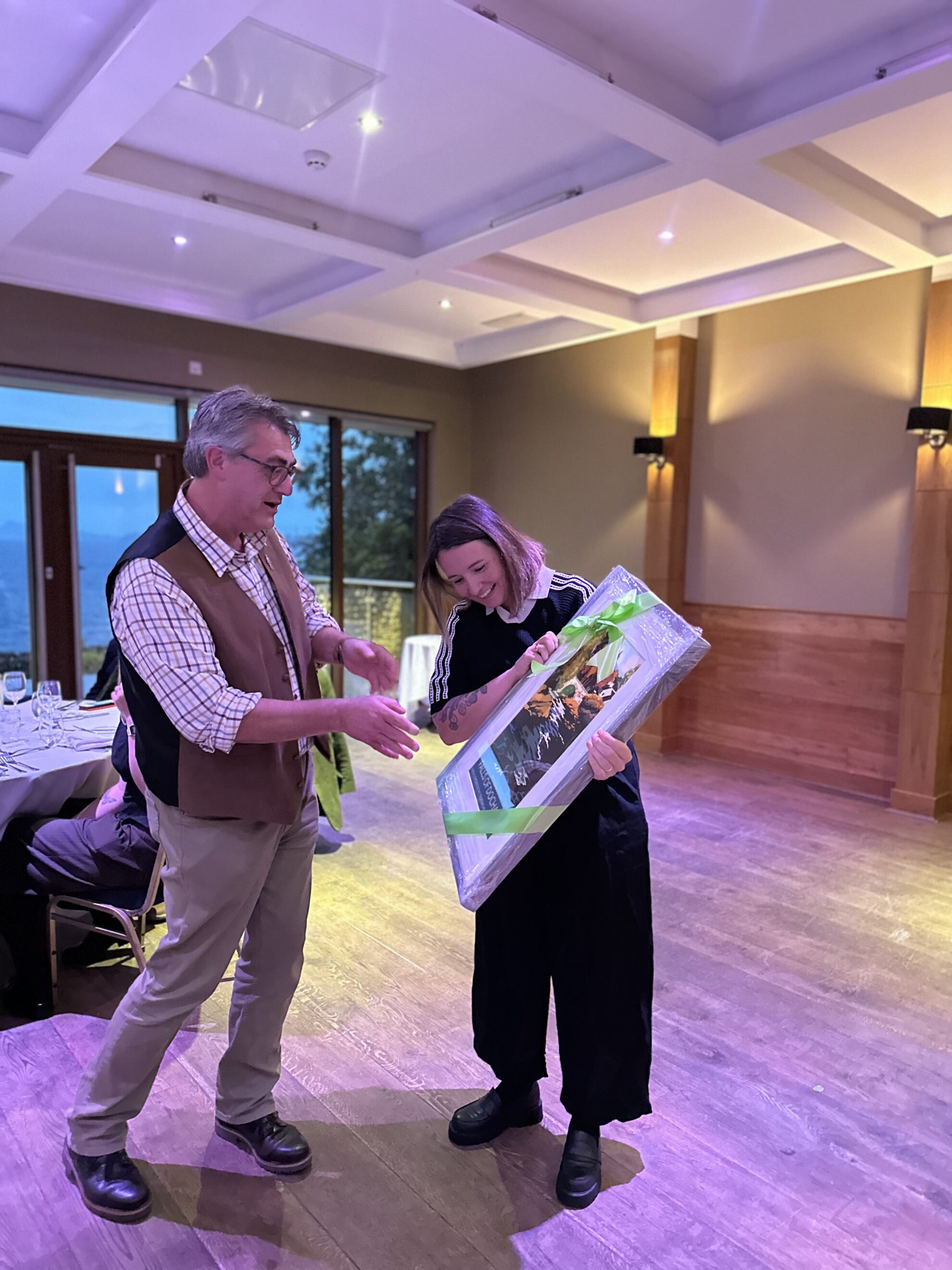
In 2018 I applied to join the board of Loch Lomond and The Trossachs National Park Authority and was appointed by the Scottish Government as a ministerial appointment to the board.
Eight years later, I’ve sadly reached the end of my tenure. I’m not sure where the time has gone!
It has been an absolute privilege, and an education, to serve the National Park on behalf of the Scottish Government.
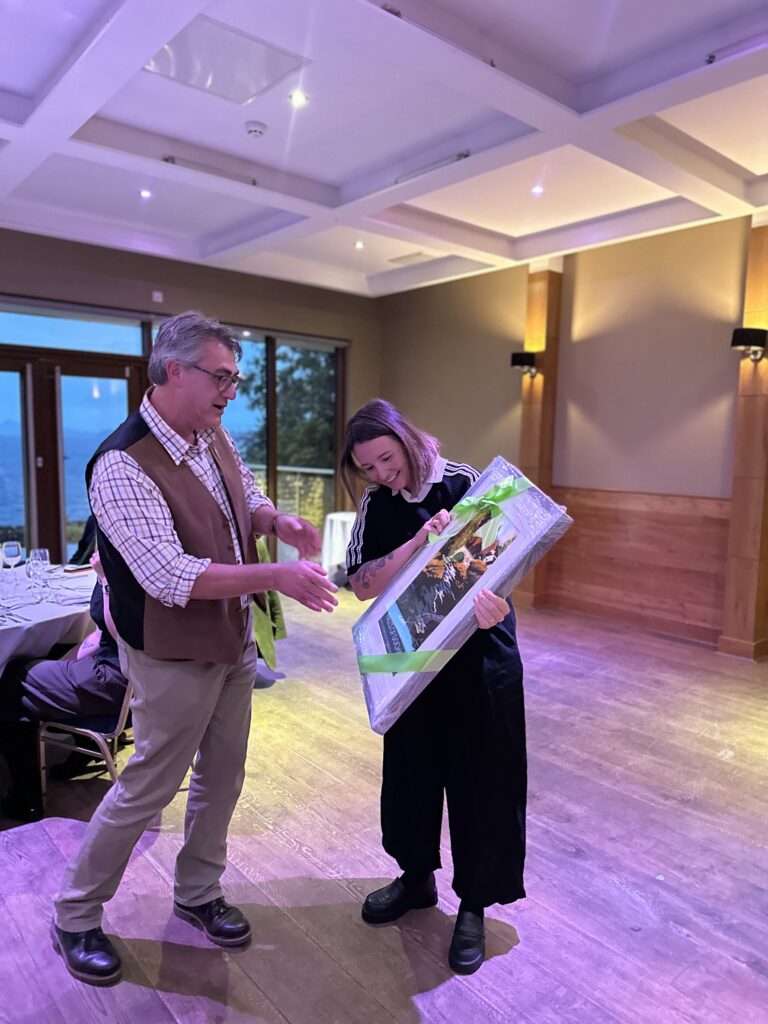
This post is a thank you, a reflection on the work I was part of, and a few thoughts on what’s next for design, National Parks and boards in general.
Learning board governance
Much of a board’s work is governance: scrutiny, assurance and decision making. It is careful work, and it should be. We were responsible for making sure the organisation met the aims set out in the National Parks (Scotland) Act 2000:
- to conserve and enhance the natural and cultural heritage of the area
- to promote the sustainable use of the natural resources of the area
- to promote understanding and enjoyment of the special qualities of the area by the public
- to promote the sustainable social and economic development of the communities of the area
I came with a different background from other board members: service design, building digital products and services, developing visitor experiences, strategy chops, along with some experience of planning processes and community engagement.
To some, it might seem strange to have a designer on the board of a public body. But a great deal of what a National Park does is deliver services and experiences.
People find information about walks. They book things, like camping spots. They apply for things, like community funding or permits to take a boat out on the loch. They report things they’ve seen, like wildlife conditions.
Everything that the “users” of a National Park do, can, and should be designed. Those users might be visitors, residents, land owners, our rangers, volunteers and more.
Here’s some of my highlights over the last 8 years;
Building service design capability
I was keen to help the organisation explore ways to bring user centered design and a focus on designing services into the fold. And I really have to give Anna Maclean the credit for believing and investing in this appraoch.
We are a small organisation, so we don’t have the scale for a large design team but we did bring full time roles inside the park and work with external experts across a range of projects.
Callum Laird was the Park’s first service designer on staff. Callum helped us bring user research and service design skills to a range of internal and external projects, working with our HR teams, and our bus services.
Keira Anderson supported us across several projects. Notably, we spotted an opportunity to work with the team handling the registration platform for vessels on the water, and to bring new regulatory requirements into the service needed following the introduction of our new bylaws.
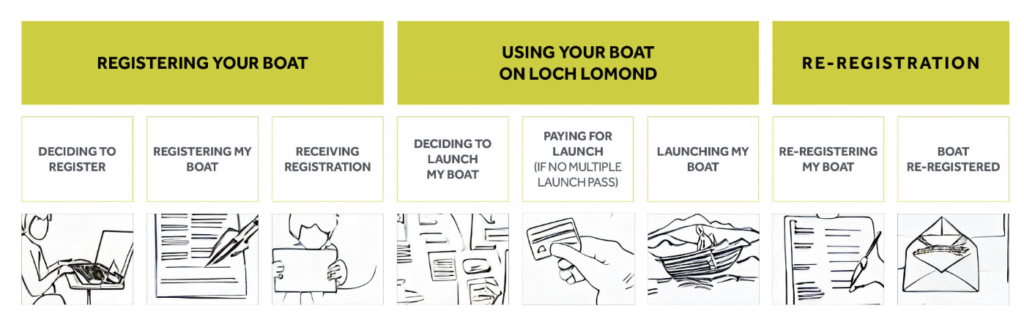
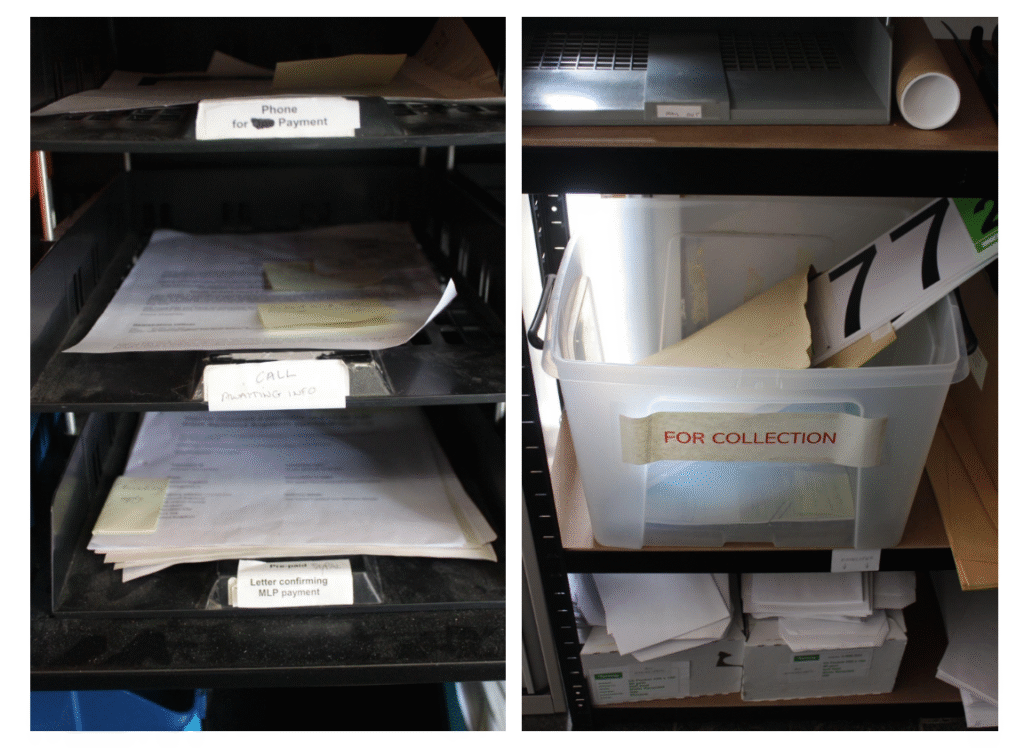
Keira helped the organisation see up close how registrations were being handled on the ground, and mapped a new service with teams to help shape the ask of our procured technology partner’s platform for handling registrations.
Charley Pothecary worked with us on our approach to inclusion as we rolled out the National Park Partnership Plan, and how to bring people into the co-development and feedback loops of our plan.
And finally, Liam Hinshelwood has joined as the Park’s first lead service designer in 2026. He is working up a range of service design projects and a roadmap to make sure our services are accessible, inclusive, and designed to meet user needs. I’m excited about what Liam is doing in exploring what our current and future technology stack can do in delivering more on our National Park Partnership Aims and user needs.
Generally, I always felt the park really got the notion of test and learn, and in essence had a good sense of being led by data. I was always impressed by the listening and data recording we did in some of our key services, and how we re-designed these each season.
In the future, I’m excited to see how new work unfolds and more teams understand where and how design can make a difference. With Liam in-house, I’ve no doubt he’ll be working lots of experiments to show the power of design, data and technology in delivering more and better for our users.
Defining National Park services
When a new website was being considered, I helped commission work to map the Park’s services as users experience them. We did this briefly before the website development, and then ran alongside it.
Dan Hill’s book Dark Matter and Trojan Horses introduced me to the idea of a project like a website as a MacGuffin: Hitchcock’s term for the object that appears to drive a story but isn’t really what the story is about.
Websites are often like this. Organisations focus on the website as if it were the goal, when the more important questions are what services you run, what their purpose is, and how they align with the strategic intent or mission of the organisation. Then you can consider how those services show up in the digital part of someone’s journey.
One of the best exercises I ran at the park was getting people just to map a bad service experience and identify what had gone wrong. It gets people thinking about services as things that can and should be designed.
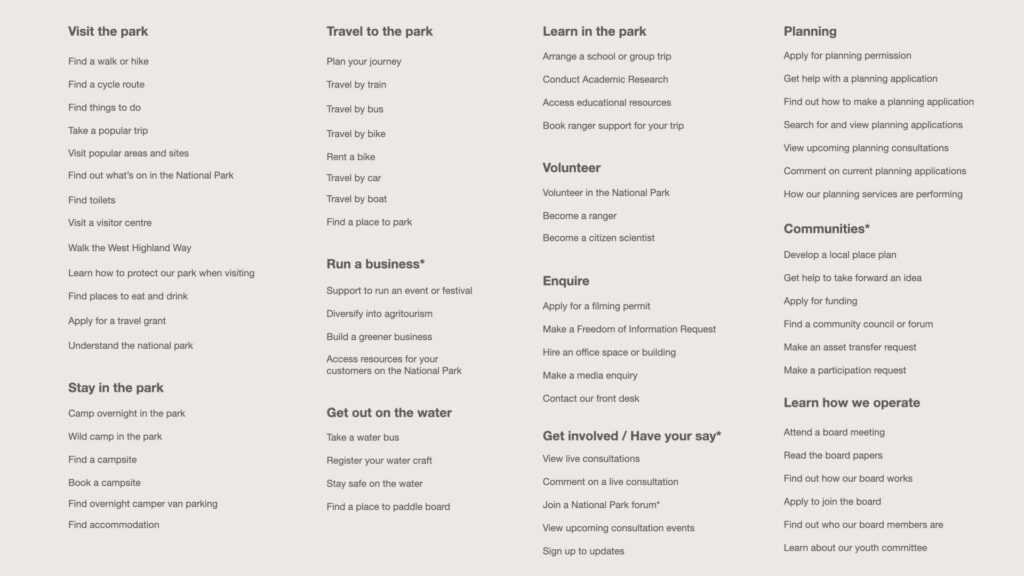
So we developed a list of services. I think this is always a vital step when considering a website re-design as it opens up the big needed conversations about what you deliver, how you meet your organisational purpose, what you own as a service provider and where this cuts across your digital products/areas of a service.
For me, I wanted to find a way of describing what the Park delivers in terms of what its users would recognise, and a foundation for a roadmap of service improvement across the National Park in the future.
This kind of service taxonomy is important. But we should also remember they are moments in time. We may see them differently in a year’s time. But, having a starting point and mental model of our services is important for collaboration across teams and departments and for designing any part of a service that forms a core navigational/way finding point for users.
We roughly categorised our services into three things:
Relational: Sometimes referred to internally as ‘brokerage’, these rely on getting to the right team or person.
Transactional: These services can be hugely impactful for getting more people into the Park (e.g. applying to be a volunteer)
Informational: Many services are mostly content, or information. Content is words, way finding and pictures – with very little ‘backstage’ work from us.
Guidance This is a subset of informational services, where the service is providing technical documentation or official guidance for eg. planning or land management.
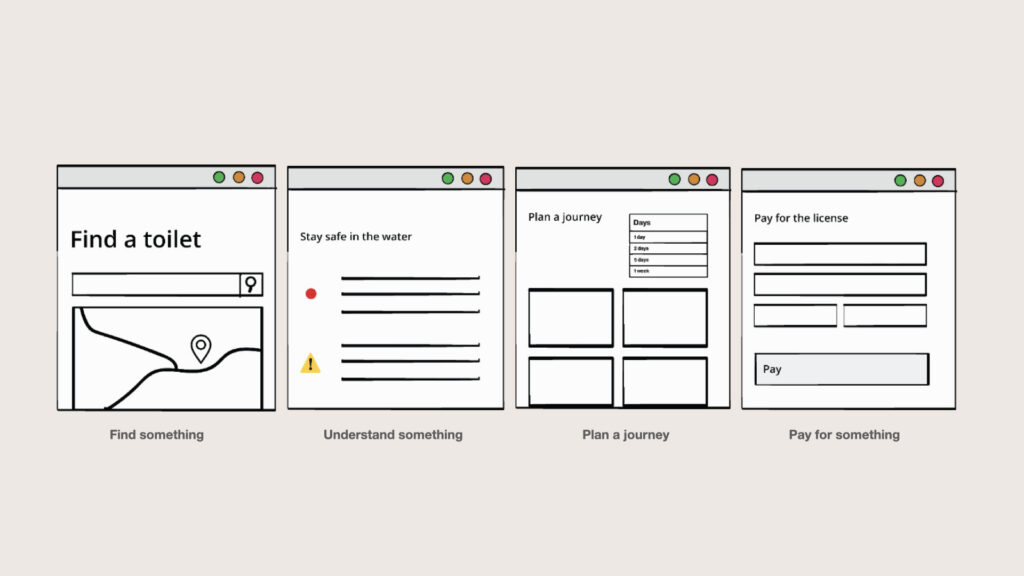
Doing this work alongside the website also showed the value of service patterns. The Park repeatedly helps people to find something, book something, pay for something or apply for something in our transactional service type. Designing these patterns well once means they can be reused consistently across multiple services, rather than each team developing its own approach.
For example, when we audited the website, we found several different ways users could pay for things. This isn’t unique to the Park; it happens in most organisations where services have evolved over time by different owners. Our strategic advice when listing services for the web development was to design one thing well, like how to find something or pay for something, and that design could then be used across every service on the website that uses it.
We developed the services list by talking to staff, along with some user research. We’re not saying the list above is correct, and services will evolve as they’re shaped. Some will become bigger and do more, and others will become smaller or be scaled back. But starting with a list was helpful, and asking “what are our services?” is a good starting point for any organisation, and for you, to understand what we consider as services.
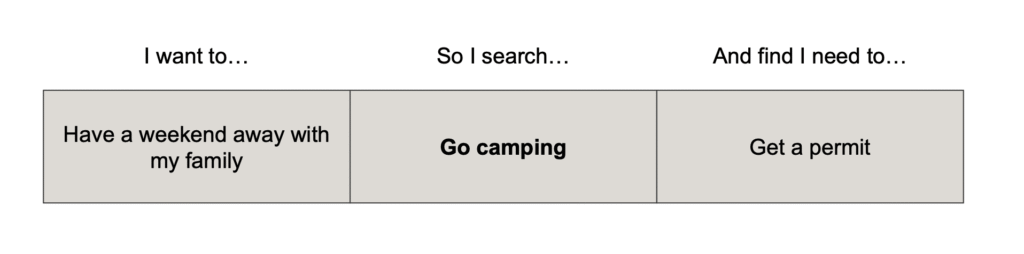
In listing services, and thinking about needs, common asks at our front desk, some user research with staff and visitors, it was interesting to identify where some of our activities could be ‘servicized’, like brokerage, or thinking about mailing lists as services rather than just communication products. Sometimes, when listing services and embarking on service design you have to be careful not to only list existing services and take an approach to ‘making them better’, but also what’s not there where there is a need being presented by users. Is this something we could serve, or tighten up daily activities serving this need into something more robust?
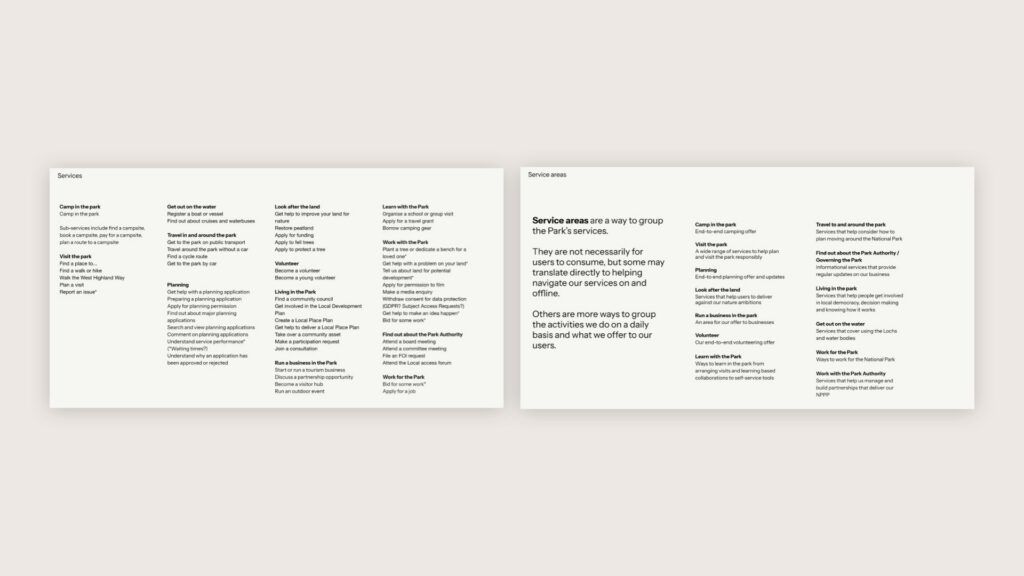
We started to circle on the idea of service areas, and services. Then smaller sub services within a service. This will always be up for grabs, and will be as services are reviewed in a future routemap of sorts.
Thanks to Anna Goss and Keira Anderson for stepping into this work with us.
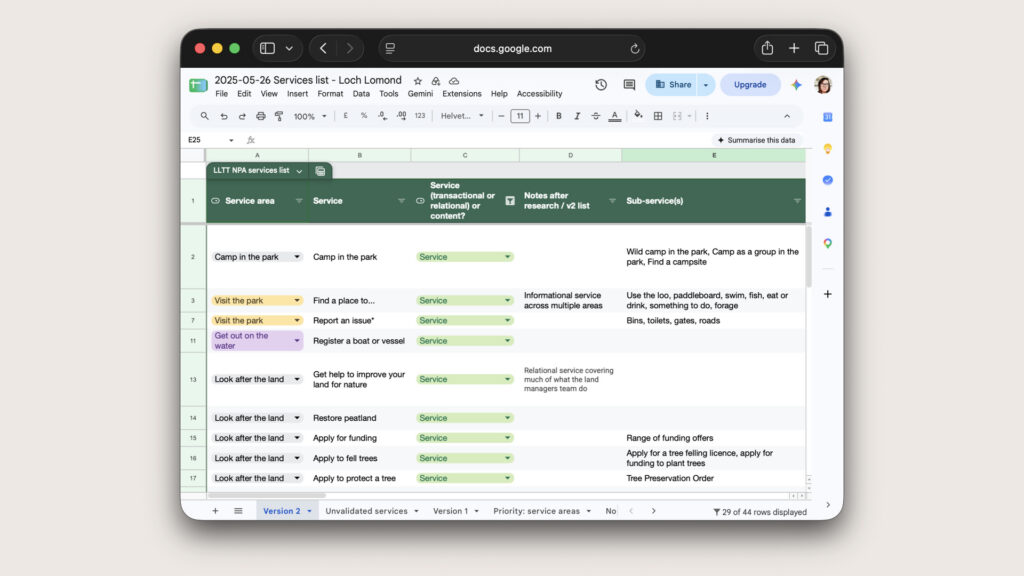
They created a live register of services in a shareable sheet, which I hope the Park will continue in some format and establish a model of service ownership that cuts across teams.
Supporting the National Park Partnership Plan Development
The National Park Partnership Plan guides how everyone with a role in looking after the National Park will work together to manage it and achieve a shared vision for the area.
The Park is split across four local authorities, who all sit on our board:
- Stirling Council (the primary local authority area)
- Argyll and Bute Council
- Perth and Kinross Council
- West Dunbartonshire Council
As your onboarding develops in the early days, a real thing that clicks is that so much of our work is in partnership with others
Much of our work happens in partnership with these local authorities and other local and national bodies. So the Partnership Plan is key: it draws a line in the sand on what our vision is, and invites partners to work with us to achieve it. So what you want to deliver, has to take partnership based co-development and models of delivery.
Working with my fellow board member Chris Spray, I helped steer the plan across our many areas of responsibility and need. The plan runs until 2029, but I’d say many of its themes and intentions are there for the long term, particularly restoring nature, tackling the climate crisis and creating a Park where communities can thrive. These should be used as guiding visions that we align activities to and change over time, given the world is dramatically shifting on a daily basis and facing multiple polycrises in the years ahead.
Developing the Futures Group, a strategic forward looking unit for the Park
James Stuart, our previous board chair, established a Futures Group in December 2020 as part of our regular sub committees at the Park.
A couple of years in, I took on chairing it and developing how it works with Anna Maclean.
Some of the most important challenges facing the Park can’t be fully understood through a single paper, presentation or committee discussion. They involve many organisations, competing priorities and long term consequences, and some of the levers sit outside the National Park Authority’s direct control.
The Futures Group was deliberately not a decision making forum. Its purpose was to give board members, staff, partners and external experts time to explore an issue together, or to consider longer term challenges and opportunities we might face as a National Park.
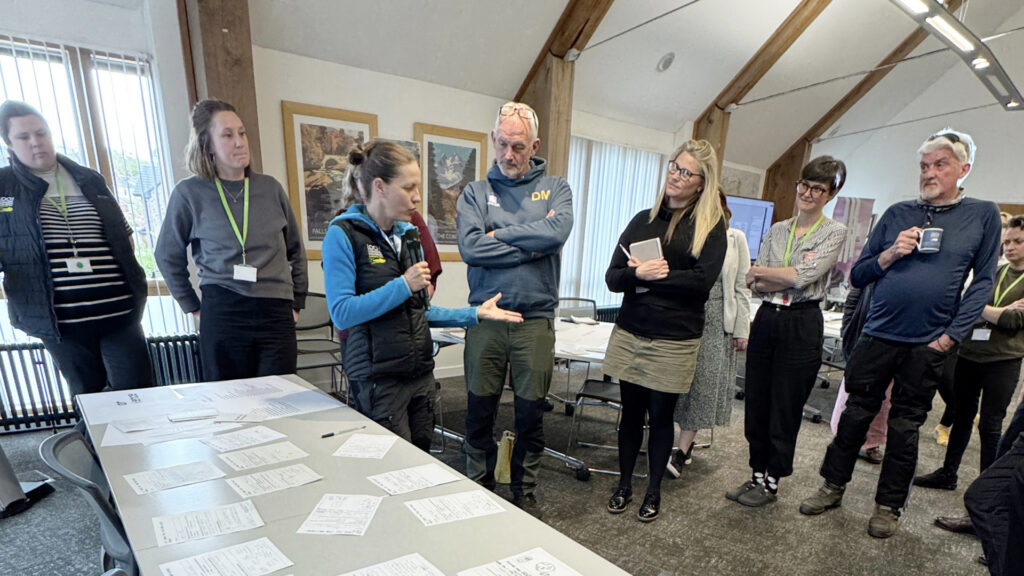
It was a space to:
- learn from innovative approaches being put into practice around the world
- explore future directions that build on existing plans, using creative methods and futures thinking
- encourage systems thinking, seeing challenges as a whole rather than as separate problems
- close the imagination gap about what might be possible
- give staff and board a safe place to reflect on delivering current plans and to explore future possibilities together
For me in particular, I wanted to create a space where plural ideas could sit in tension, rather than falling into a pattern of reductive problem solving.
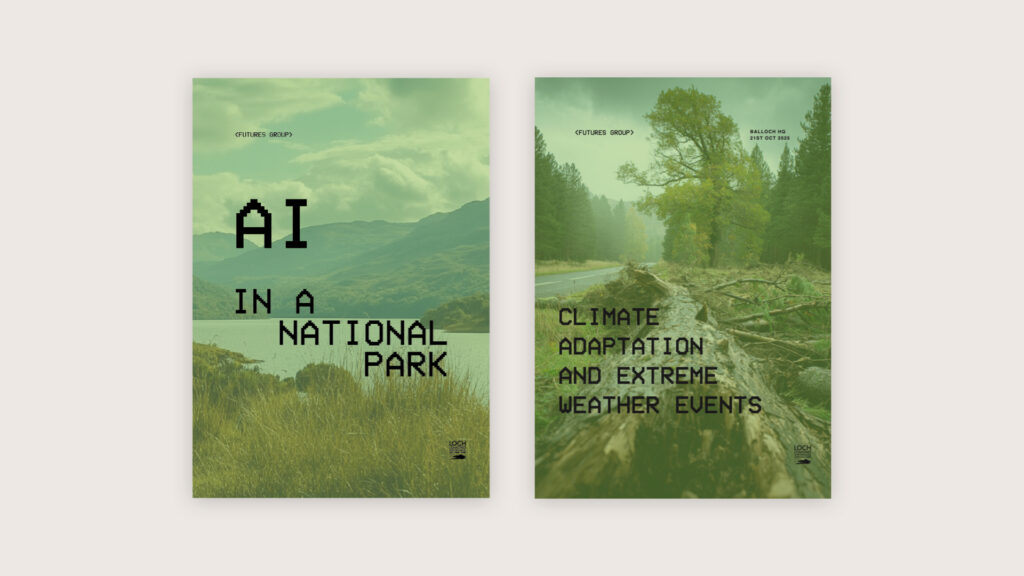
Over the years we explored:
- Sustainable and visitor transport (2021, revisited in 2023)
- The Place Programme and visitor infrastructure investment (2021 and 2022)
- Housing (2023 and 2024)
- Connecting people with nature (2024)
- Artificial intelligence (2025)
- Climate adaptation and organisational resilience (2025)
- Planning interventions for housing delivery (2026)
Sessions drew on methods from futures practice, including elements of backcasting and systems thinking, with design methods at the centre to give form to our discussions. We prototyped things when we could, to make for more informed discussions.
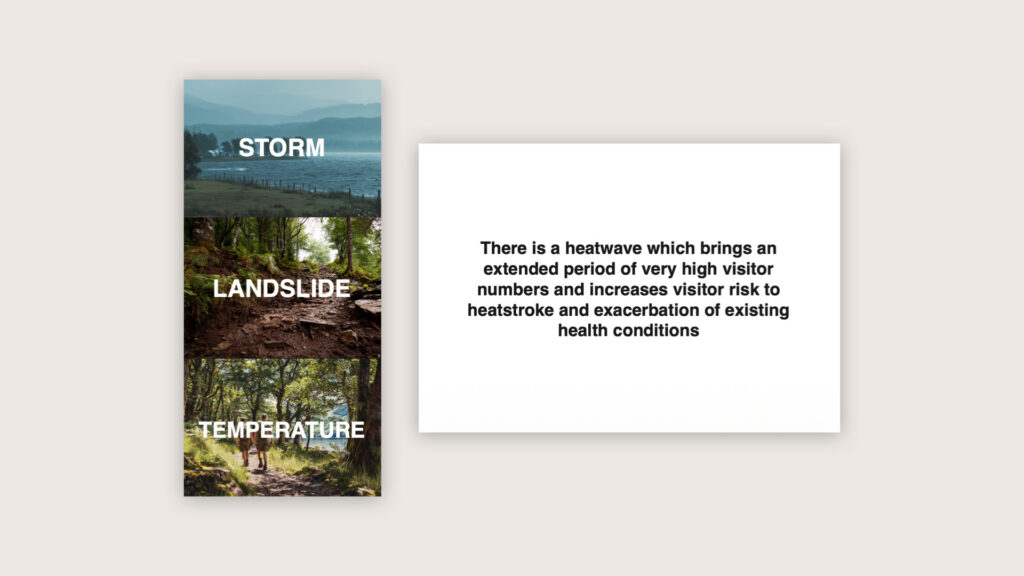
When we looked at extreme weather events and climate adaptation we asked: What are the risks to the National Park Authority from a rapidly changing climate and how can climate adaptation help the organisation to be more resilient and prepared to cope with increasing and extreme weather events? We used scenarios to think through how our services would respond. What could we adapt now, looking forward?
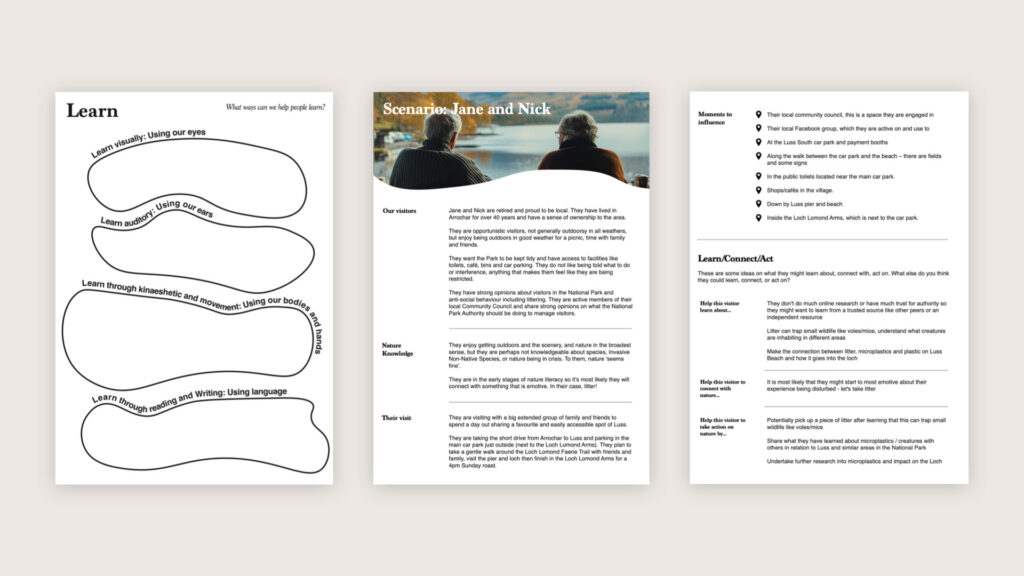
When developing our visitor engagement models, we used an internal model that Nik Turner was developing to identify intervention points for educating visitors about nature and climate change in the Park.
We ran a Futures Group session looking at different users of the Park, and through identifying intervention points in their journeys, developed a range of ideas on how we could help visitors learn about nature and biodiversity. The model asked us to consider different senses, learning through listening, reading, movement and seeing.
I was particularly interested in creating a design principle for all our touchpoints, whether an email, physical signage or a webpage: an ask that each one teaches users one thing about the challenges we’re facing, and one action they could take when they get home.
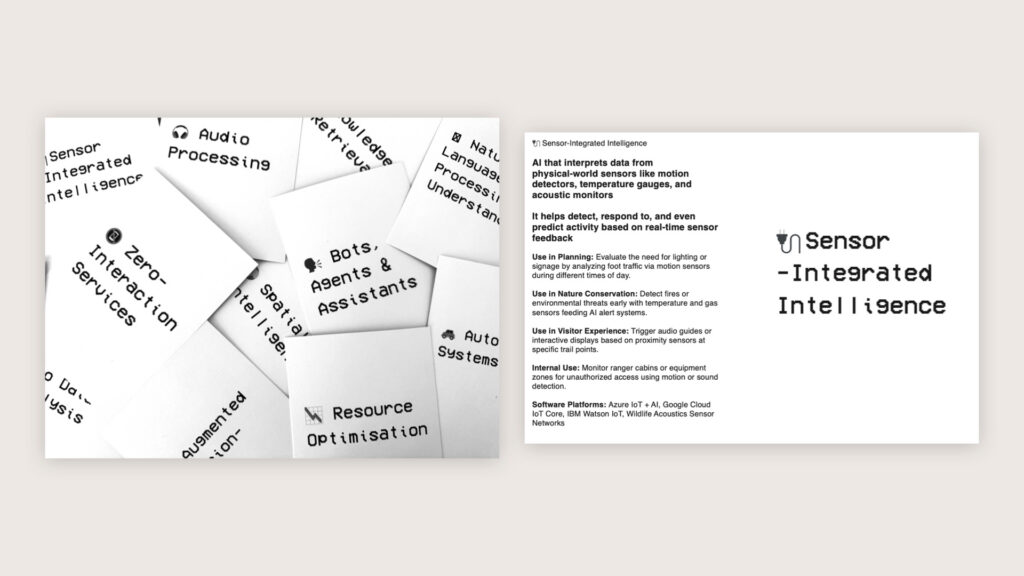
For our session on AI, I wanted to move past the generic “should we use AI?” conversation and really think about the technology and what it can do, rather than seeing AI only as a chat product built on a large language model. So we used AI tech cards I’d created, which explain the possibilities of different technologies, and asked our teams to use one or more of them to consider how we could deliver a service differently, more efficiently, or help us better meet needs.
Much of the value of the Futures Group was indirect: a shared understanding of complex problems, assumptions tested early, and staff gaining a sense of the board’s appetite for risk before work was developed. It also gave staff time away from day to day pressures to reflect on their roles and the future of their work. That is rare in any organisation, and I think it mattered. Organisations, take note! Protect a strategic space for your organisation with delivery teams.
A few examples of outcomes:
- The Place Programme. We explored how investment in visitor infrastructure could support communities, visitors, nature and local economies at the same time. Principles from those sessions were embedded in the programme before it entered formal governance.
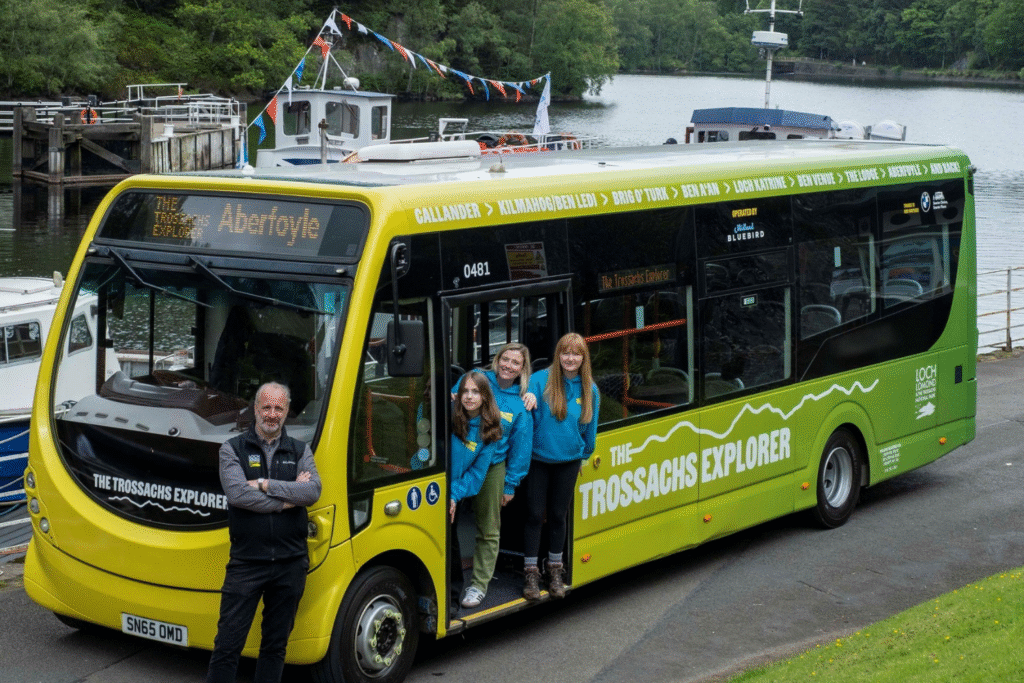
- Transport. Our sessions helped give the board context for supporting investment in sustainable transport. This work led to joined up thinking on transport across partners, and recognition from major stakeholders that the Park has the expertise to convene on a transport vision. This led to a funded Sustainable Transport Officer role, and eventually our green bus service, the Trossachs Explorer!
For each Futures Group session we brought in a range of external speakers, often to fill what I call “the imagination gap”: showing examples of work and projects elsewhere, and thinking about how we could learn from them and apply them to our own context. In the AI session, for example, we wrestled with the opportunity of fast, large scale landscape mapping and monitoring of nature’s condition, set against the environmental impact of the data centres needed to process prompts. One of the most impactful speakers we had was Hannah Smith from the Green Web Foundation, who really hit home with the energy needed to power prompts.
We heard from Spanish national parks on rising visitor numbers in small areas, Snowdonia on managing cars, the Satellite Applications Catapult on identifying wildfire threats, architects on place based interventions that spark visitor engagement, people with opposing views on short term let control areas, and local planners on designing experience pathways in towns. We had fantastic speakers, so thank you to everyone who was involved!
And I loved having members of the Youth Committee join in: a group of young people thinking about the future of our National Park.
Building partnerships with design institutions
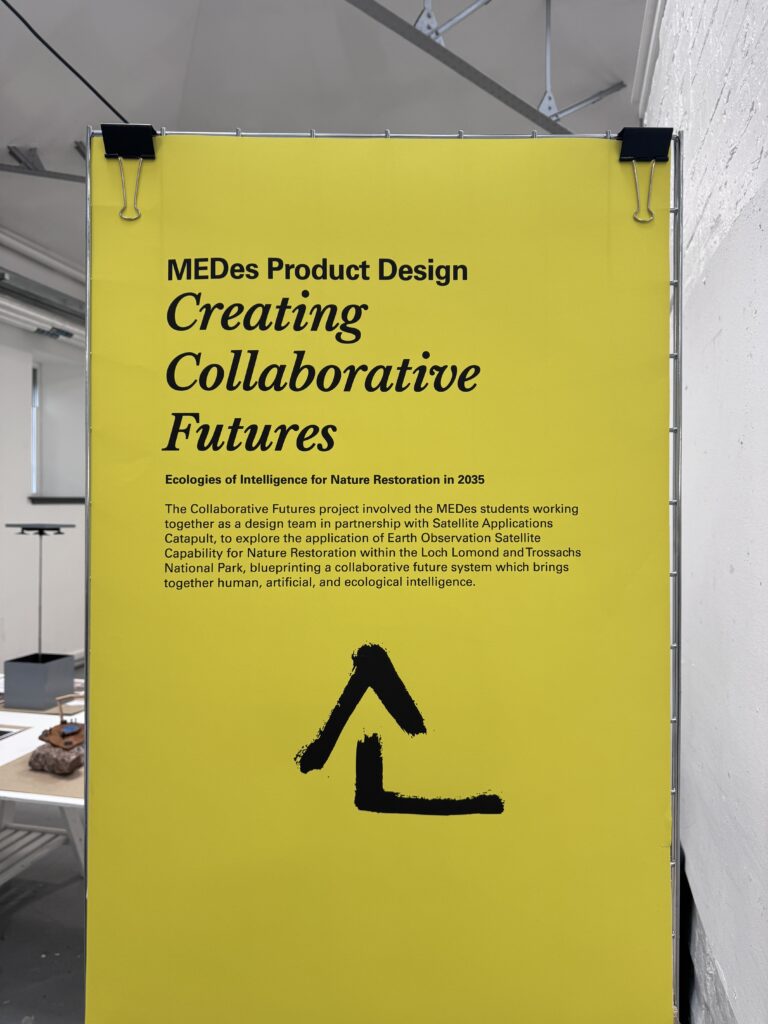
I created a partnership with the Glasgow School of Art, who brought in the Satellite Applications Catapult, to look at technology and nature restoration. The work culminated in Ecologies of Intelligence for Nature Restoration in 2035 with various concepts on how satellites and technology could monitor ecologies in the future.
Big thanks to Kirsty Ross at GSA and Pete Swanton formerly at the Catapult for setting that up, and to Zoë Prosser (an ex Snook, now GSA) for supporting the students.
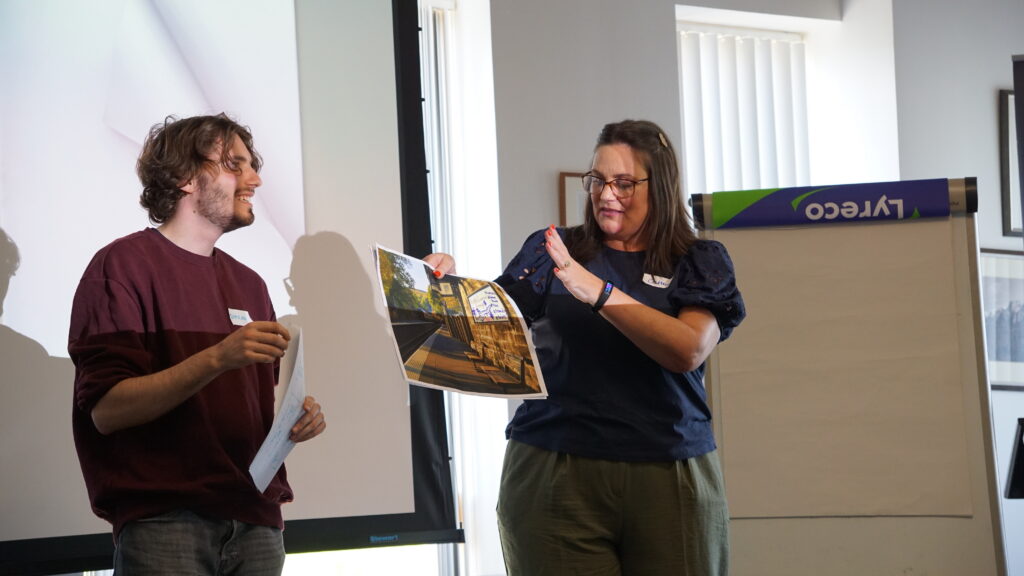
I’d love to see more partnerships with design institutions, and technologists. My dream would be an experimental in-house unit working across our National Park Partnership Plan and services to see the art of what’s possible.
Questions I asked at board
I really enjoyed the board meetings themselves. There are four a year. If I made a word cloud of my main questions and points, I reckon it would go something like this:
- Is this service going to be inclusively designed and accessible?
- Don’t use efficiency as the metric for a re-design. Think about how to best meet user needs and design from there
- Are we testing this before it goes live?
- Do we need an app for that?
I learned a lot from listening to my fellow board members around the table: the questions they asked, and how they approached risk, nature restoration and planning. Much of the time it felt like a really good team, with roles that complemented each other. Our locally elected members brought real depth of insight into their communities and experiences.
So, what would I love to see next for the National Park, and for others in similar areas?
Communities as service providers
We already work with communities on their Local Place Plans. These are community led documents, enabled by the Planning (Scotland) Act 2019, that allow local residents and groups to propose priorities for land use, development and their community.
I think there is a wider opportunity to look at where and how communities can be involved in designing and running services themselves, not only being consulted on them. A National Park and its partners can support communities and businesses to improve the visitor experience or take ownership of local outcomes. What services would help them do that? Funding, where possible, or a lab process that helps local people incubate ideas that deliver on the National Park Partnership Plan and develop the skills to do so.
From an organisational perspective, that could mean sharing visitor data so local businesses can identify opportunities and develop new offers. It could also mean learning from community led services elsewhere and sharing that knowledge with communities. One example is Go Stroud Bus, a bus service set up and run by local people from Stroud to the end of the Elizabeth line, making travel between Stroud and London cheaper for everyone.
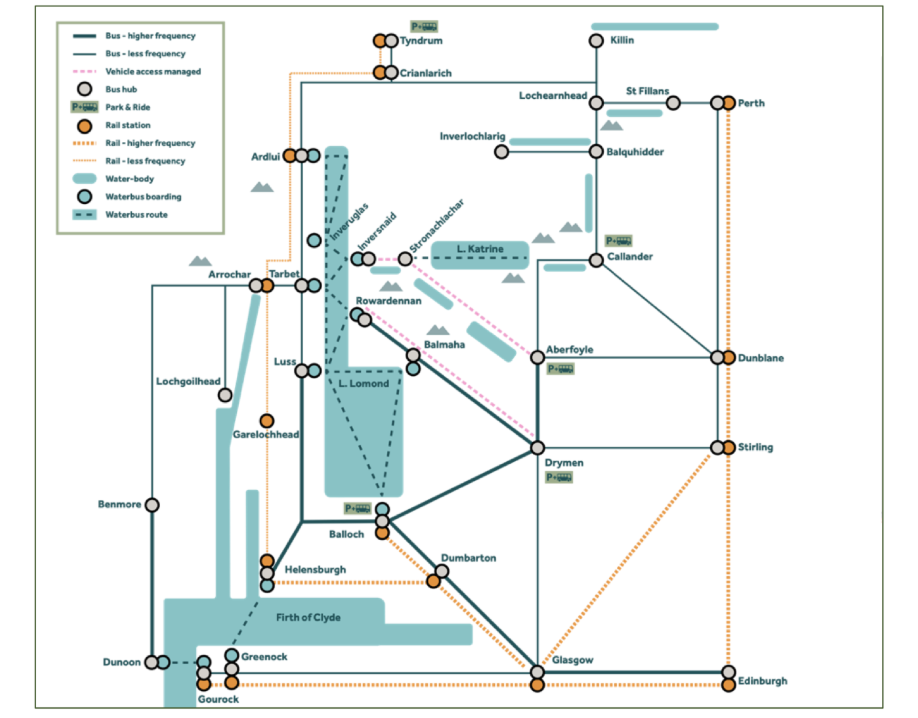
I’ve been so pleased that sustainable forms of transport has been really invested in and how this interweaves with our wider planning intentions and vision. As someone who was a non driver when they started the board role, relying on bikes and buses I was always interested in how we join up transport, visitor hot spots and experiences across the park and make it accessible.
A National Park is well placed to bring communities together around a shared need and ask what could be built together.
More experimentation and prototyping
I’ve always believed in making things in order to think.
A prototype turns a conversation about what might be possible into something people can see, question and improve. It is often the quickest way to find out whether an idea is worth pursuing, and the cheapest way to find out that it isn’t. It also helps you interrogate not only whether a concept works for users, but whether it can be delivered from a technical and organisational perspective.
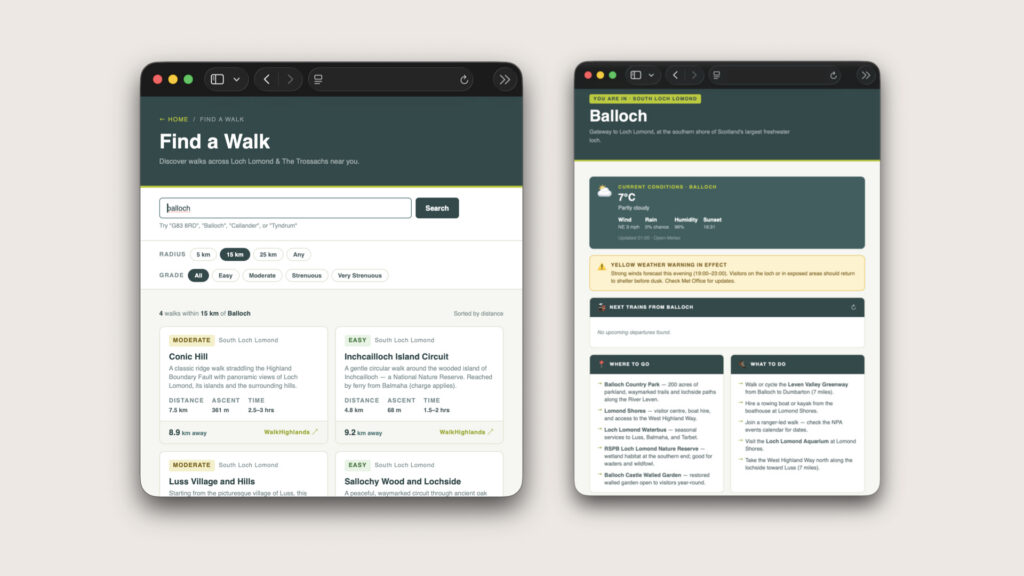
One of the prototypes I made explored how the Park could give visitors live, up to date information at the places they need it. The idea was to pull together different data streams, such as nearby public transport options, the weather, and local walks that could be promoted, along with space for updates or specific messages like warnings, and make them available through QR codes at points across the National Park. Someone standing at a car park, a trailhead or a pier could scan a code and see what’s happening right now, rather than relying on a sign that may go out of date or a web page that hasn’t been updated.
This idea came up a number of times, through different Futures Group sessions and on field visits to places like Inchcailloch: how the Park could provide real time information and visitor experience interventions at specific points. Prototyping lets us test how that could work for visitors, and what it would ask of the organisation behind it, before committing to anything.
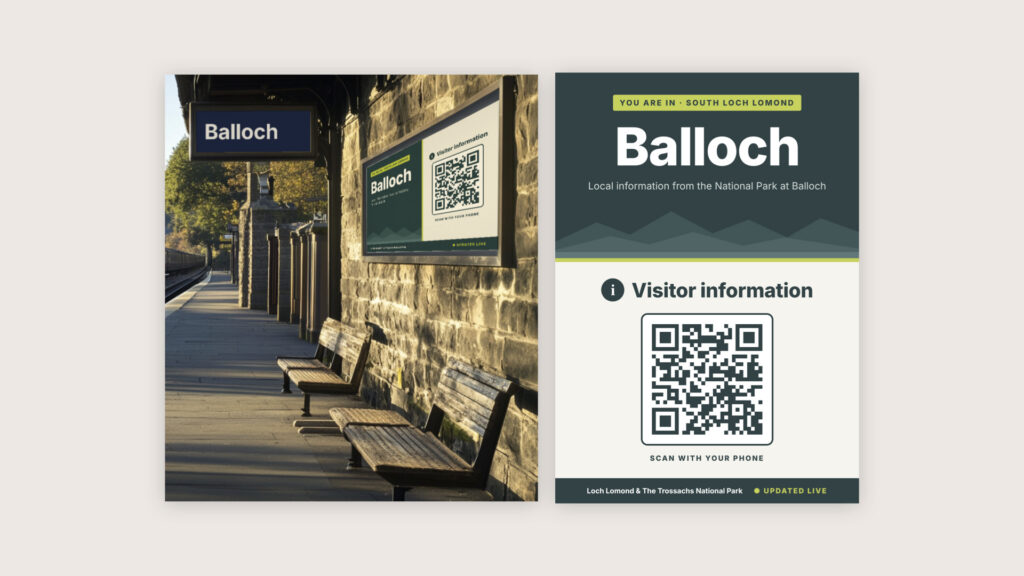
I would love to see something along those lines developed incrementally. A real time information network for specific geographic points and visitor needs.
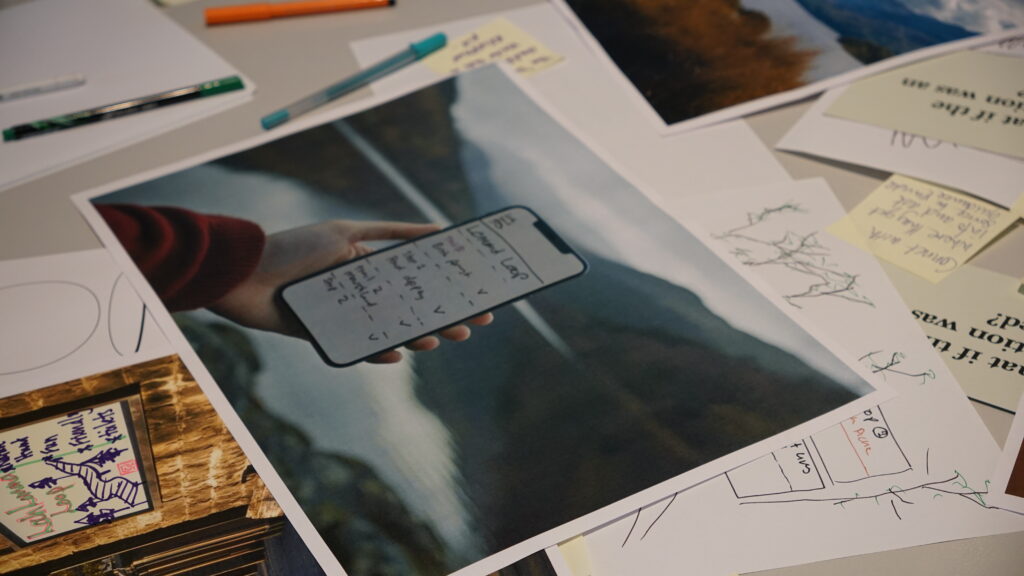
To build on this, I’d encourage organisations like the National Park (to be honest, all organisations wrestling with what’s next) to set up small experimentation teams for a fixed period, guided by their strategy (in our case the National Park Partnership Plan), to run a series of experiments exploring areas of their plan: the future of visitor experience, monitoring the state of nature, how to prepare for climate change risks/threats or improving internal delivery, making it easier for staff to spend time on more complex challenges, releasing them from administrative work. By inviting designers and technologists to play, we would develop a deeper understanding of what our technology stack can do/and how it needs to change in order to deliver on our ambitions.
And with agentic AI… you need to do some experimenting and planning your response…NOW.
Commissioning work jointly with others
Loch Lomond and The Trossachs National Park and the Cairngorms National Park run some similar services, with some similar challenges, pressures and opportunities.
Looking more widely across the UK, National Parks and National Landscapes (formerly Areas of Outstanding Natural Beauty) also have similar services and challenges (some which we have shared in Future Group sessions).
Organisations like National Park Partnerships and the strong relationships across all our National Parks put us in a good position to undertake the commissioning of joint research, design work, even procuring technology platforms (I’d go a step further and suggest sharing the building and managing of some technology products ourselves).
Thinking in terms of service patterns and common services, I believe there are huge savings to be made on some of the like for like needs. Of course, every design will have its own context. But take a basic service pattern like booking a campsite. The content will differ from area to area, depending on rules, bye-laws and specific geographic needs, but much of the user journey and functionality is the same.
Imagine ten organisations that each spend capital on their main outsourced technology pooling that money to fund one design and development team together. Much cheaper, more in control.
Keeping a space for the future
This applies to the Park, but it applies equally to any organisation with a board.
Create a lasting space for board and staff to think about the future together: a place to consider major challenges and opportunities before they become decisions. Few organisations commit to this, because there is always a more pressing meeting. But it is one of the most valuable things a board can do, and it gives staff space to step back as well. I hope the Futures Group continues, and evolves.
What I’ll be following
I’ll be interested in how the Park responds to AI. Agentic AI is going to mean people skip websites entirely, and all organisations need to prepare for that. As more people plan visits through agents and third party sites, how can information about visitor experiences, access and safety stay accurate and verifiable? The thinking behind the live information prototypes feels really relevant to test with agents.
To all organisations out there, have someone on your board who understands how technology works, design skills helpful. You don’t need a seasoned CTO (could be good) but someone who really gets applying technology to delivering on strategy and enough to ask hard questions about data, security, design and accessibility. So please put this into your criteria for board positions.
Thank you
There’s so much more I could say about the experience and all the other facets of the work from Future Nature to Volunteering, and everything we got to oversee and give our perspective on.
What I do want to end with is that the team at Loch Lomond and The Trossachs National Park are extremely talented and knowledgeable in their fields. I have always trusted their ability, and our role as a board was to support them and nudge where needed, and push where we could do more, so that together we delivered the best we could with the resources we have.
The teams work incredibly hard because they are committed to the cause and the protection of our natural landscapes.
Many of the Park’s hardest challenges are the kind service design is built to help with. Of everything I was involved in, the thing that matters most to me is that design and service design are now establishing a real place in the Park’s work, and I hope that continues.
So a huge thank you (and I’m so sorry if I’ve missed anyone) to:
- My fellow Scottish Government appointees: Chris Spray, Ronnie Erskine, Claire Chapman and Heather Reid
- The executive team: Chief Executive Officer: Gordon Watson
- Director of Environment & Visitor Services: Simon Jones
- Director of Place: Stuart Mearns
- Director of Engagement and Innovation: Anna MacLean
- Head of People & Assets: Samantha Stubbs
- Head of Governance & Performance: Jane Kemp
- Head of Visitor Services: Kenny Auld
- The people keeping us in line on governance: Dougie Smith, Annie Fitzpatrick and Jane Cook
- The wider team members I had the chance to work with/have in our Futures Group: Nik Turner, Dom Hall, Jo Wright, Susan Brooks, Deborah Sandals, Bob Cook, Caroline Strugnell
- My future group members: Shonny Paterson, Rhona Brock, Martin Earl
- My fellow design passengers: Liam Hinshelwood, Cal Laird, Keira Anderson, Charley Pothecary, Anna Goss
So many people to mention, so I am sorry if I missed you! i
It has been an absolute pleasure and I will miss the Park!